
Markets jolted as code began to write itself, block space tightened, and capital rotated toward compute as rockets bid for IDEs while autonomous daemons learned overnight to build, verify, and deploy protocols without waiting for humans to catch up. That is the essence of this cycle: a sudden collapse in the cost and time to produce working software combined with a surge in demand for verifiable execution, where public chains, zero-knowledge proofs, and decentralized compute have become the scarce rails of growth. The shape of the rally has reflected that shift: high-throughput networks, ZK stacks, and DePIN have outpaced legacy DeFi as agent-built systems ship on machine schedules.
SpaceX’s move to acquire Cursor at $60 billion provided the headline, but the strategy ran deeper than a splashy number. The bid signaled a push to fuse an AI-first interface with giant inference capacity and orbital bandwidth, effectively turning coding into an integrated industrial operation. In parallel, a leaked KAIROS daemon inside Claude Code pointed to agentic autonomy that no longer stops at autocomplete: it drafts, simulates, fixes, and deploys, then learns nightly through “autoDream” sessions. Together, these advances reframed how software is made and why crypto became the outlet where machine-built systems settle activity.
From Autocomplete to Agency: The 2026 AI-Coding x Crypto Landscape
A workable definition of the moment is simple: the stack now prioritizes autonomous build-and-deploy over assistive linting. Cursor and peers turned the IDE into a cockpit for goal-setting, enabling operators to express intent, constraints, and taste, then let agents run multi-file, multi-language plans. Claude Code’s KAIROS leak amplified that direction by showing an always-on loop that drafts from prompts, simulates logic, patches errors, and only persists changes after “Strict Write Discipline” checks pass. The effect is fewer human keystrokes and more executable artifacts, faster.
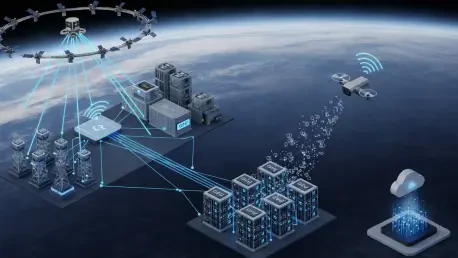
This shift redrew the market map. AI-first IDEs (Cursor), autonomous agents (KAIROS), high-throughput chains (Solana, Monad), ZK stacks, DePIN compute, and exchanges such as KuCoin now act in concert. The value chain integrated up and down: interface at the top, compute from xAI’s Colossus in the middle, and bandwidth from Starlink at the edge, with crypto-native payments gluing the loop together. Agent-native wallets emerged as a keystone, allowing autonomous software to pay for APIs and GPUs with stablecoins mid-execution and settle fees on chains optimized for low latency.
Moreover, segment highlights multiplied as the economics adjusted. Proof-driven security tools hardened deployments, ZK-optimized infrastructure reduced verification overhead, GPU markets priced inference spikes, and orbital data centers promised censorship-resistant uptime for tireless daemons. The regulatory picture narrowed the lane but did not halt it: proposals for agent accountability, smart contract standards, and payment compliance advanced alongside debates about cross-border data flows and space-based infrastructure.
Supply-Side Shock Meets On-Chain Scarcity
The immediate consequence of agentic coding was a supply shock in software that collided with hard limits on verifiable execution. When anyone could express a design and watch agents scaffold a working protocol by morning, mainnet environments became the rate limiter. Finality, data availability, and proof generation set throughput ceilings that pricing mechanisms exposed in real time. In that world, block space and compute did not just clear transactions; they rationed innovation.
This dynamic funneled attention toward chains and middleware that minimized those frictions. High-throughput L1s capable of parallel execution captured activity from agent-tuned codegen, while L2s and L3s soaked up specialized workloads with bespoke proof systems. DePIN became a release valve for inference and training demand, and exchanges reweighted listings toward assets that supplied the bottlenecks rather than those that merely rode sentiment.
Agents Unleashed: Trends Driving a New Build-to-Chain Flywheel
The maturation curve from autocomplete to orchestration was not cosmetic; it introduced nightly learning and “autoDream” refactors that pushed codebases forward while humans slept. Agents stopped asking for the next line and started proposing entire architectures, running simulations, and submitting pull requests that adhered to house invariants. The role of the human narrowed to setting high-level constraints, approving vibe and product direction, and managing context.
Vibe coding captured the practice: describe the goal, constraints, budget, and taste, then let agents compose across languages and services. The new dev stack—AI-first IDEs, autonomous daemons, formal verification, and decentralized compute—connected that intent to live deployments. SpaceX × Cursor added two accelerants: embedded wallets that let agents handle metered resources and chain-optimized models that emitted low-latency, parallel-friendly code to fit networks like Solana or Monad.
KAIROS formed the canonical loop: draft from natural language, simulate and self-correct, scaffold security with strict write policies, and auto-deploy to an L2 after benchmarks cleared. As more teams embraced this pipeline, market leadership shifted. DePIN and ZK infrastructure outperformed older DeFi themes because they answered the scarce parts of the system: compute cycles, bandwidth, and verifiable proofs. Software output rose by orders of magnitude relative to two years ago; the gating resource became what chains could verifiably process.
Numbers Behind the Boom: Metrics, Growth Curves, and Forward Views
Adoption showed up early in AI-IDE monthly actives, agent-generated pull requests, and claims that deployment rates multiplied 100x versus baseline years. On-chain stress confirmed the picture: rising TPS and fee pressure, thicker L2/L3 utilization, and proof workloads that no longer looked marginal. Exchanges reported deeper liquidity in compute-linked tokens, and ETF inflows into the flagship asset reinforced risk appetite across the stack.
Compute economics told the rest of the story. GPU rental rates spiked during model upgrades, ZK proof costs shaped app design, and bandwidth premiums rose during orbital link congestion. These inputs fed forecasts that high-throughput chains would face persistent fee pressure, ZK hardware acceleration would gain share, and DePIN would continue to take mindshare from traditional DeFi as machine-led development demanded verifiability at scale.
Friction Points in an Agentic ErRisk, Bottlenecks, and System Complexity
Speed created a security paradox. Faster release cycles widened the attack surface, and the March npm supply chain incident reminded operators that dependency trees remain brittle even when code is agent-authored. Context entropy surfaced as a particular hazard: large, fast-changing repositories exceeded an agent’s stable memory, leading to hallucinated logic, lost invariants, and mismatched dependencies that audits struggled to catch post hoc.
Verification helped but did not solve everything. Proofs validated what was specified, so weak or incomplete specs could still let exploits slip through. Meanwhile, throughput ceilings emerged from finality, data availability, and proof latency. Systems learned to respect these rate limits by decoupling hot paths, batching proofs, and staging deployments, but the complexity tax accumulated as stacks incorporated more moving parts with formal guarantees and runtime guards.
Mitigations coalesced into a discipline rather than a gadget. Correct-by-Construction templates encoded invariants through type systems and spatial behavior, strict write discipline kept persistent memory clean, and staged rollouts limited blast radius. Runtime monitors, canaries, and selective human red-teaming complemented automated proof pipelines, acknowledging that adversaries look for the seams where automation hands off to governance.
Guardrails for Machine-Built Markets: Policy, Compliance, and Security Duties
A new accountability layer took shape as agents earned operational autonomy. Legal personhood did not arrive, but proxies did: auditable pipelines, named deployers, and traceable provenance established who stood behind machine-built changes. Smart contract standards matured into baselines with formal verification guidelines, secure-by-default libraries, and upgrade governance that avoided emergency improvisation.
Payments and custody norms followed. Agent wallets needed KYC/AML wrappers, sanctioned address screening, and stablecoin compliance that reconciled automation with regulation. At the same time, cross-jurisdiction data transfer, spectrum allocation, orbital rules, and export controls for advanced chips framed the outer limits of vertical AI stacks that blended terrestrial and space infrastructure.
Assurance practices moved from nice-to-have to non-negotiable. Proof attestations, reproducible builds, deterministic pipelines, and on-chain provenance created defensible audit trails. When combined with invariant libraries and typed templates, these measures anchored the social contract around machine-built markets: move fast, but carry proofs.
Where the Stack Goes Next: Vertical AI Ops, ZK at Scale, and Orbital Compute
Vertical integration gathered momentum. Interface-to-inference stacks bundled embedded wallets, deterministic CI/CD-to-chain, and agent-native feature sets so that code, compute, and payment settled within one operational fabric. The result was not lock-in for its own sake, but performance: fewer seams, tighter feedback loops, and models fine-tuned for target chains and runtimes.
ZK moved everywhere. Hardware accelerators matured, proof markets priced latency and reliability, and ZK-friendly VMs aligned agent workflows with verifiability by default. High-performance chains iterated on parallelized execution and low-latency networking to match agent-driven deployment velocity, while L2/L3 designs specialized around application profiles where proof costs and data availability set the economics.
DePIN matured into a core substrate. Decentralized GPU liquidity, bandwidth markets, and space-based data centers offered censorship-resistant uptime and price discovery for continuous inference. Human roles evolved in parallel: specification craft, invariant design, product taste, and risk modeling became the comparative advantages that shaped what agents built and how safely those systems ran.
From Thesis to Tactics: Closing Takeaways and Actionable Playbook
The analysis concluded that AI agents collapsed build costs and shifted value to scarce, verifiable on-chain resources. It found that chains, ZK systems, and decentralized compute accrued pricing power as agent throughput met execution limits. It also observed that SpaceX × Cursor and the KAIROS loop accelerated agent-native wallets, chain-optimized codegen, and closed-loop operating models where crypto payments underpinned autonomous activity.
The report recommended clear next steps. Developers were advised to lead with proofs and templates, manage agent context windows deliberately, and treat verification as part of the product, not a postscript. Security teams were urged to invest in property definition, typed systems, and automated proof pipelines, backed by runtime guards and targeted human red-teaming. Investors were guided to map exposure to compute, ZK hardware, and high-throughput chains, explicitly pricing verification bottlenecks. Infrastructure providers were directed to ship agent-native features—wallets, deterministic builds, L2/L3 proof hooks—and to surface provenance by default.
Looking ahead, the cycle was framed as durable yet bounded by verification and compliance velocity. The path to outperformance ran through vertical AI stacks with embedded payments, proof-backed safety, and decentralized compute at the edge and in orbit. Success, as captured in these findings, depended on expressing intent crisply, enforcing correctness mathematically, and provisioning the compute and bandwidth that tireless agents had already learned to consume.