
The Dawn of Intent-Driven Frontend Architecture and Generative UI
The traditional reliance on static frontend templates is rapidly dissolving as the industry moves toward a reality where user interfaces assemble themselves in real-time based on specific human intent and context. Google has positioned itself at the center of this shift with the release of A2UI v0.9, a framework designed to standardize the orchestration of generative user interfaces. This technology moves beyond simple code generation by creating a system where the underlying intent of a user is entirely decoupled from the technical execution of the frontend. This ensures that the application responds to what a person is trying to accomplish rather than merely following a pre-defined path set by a developer months prior.
A significant innovation within this release is the implementation of the Trusted Catalog methodology. This approach effectively eliminates the persistent problem of AI hallucinations in UI design by restricting the generative model to a specific library of pre-built, corporate-approved assets. Instead of the AI attempting to write raw HTML or CSS from scratch, which often leads to broken layouts or non-compliant code, it functions as an intelligent orchestrator. It selects and arranges verified components to fulfill a request, ensuring that every generated screen remains within the bounds of organizational design systems and security protocols.
The paradigm shift here is profound as it replaces the generation of raw syntax with the dynamic arrangement of high-quality, native components. By moving the focus from code production to asset orchestration, organizations can maintain a high level of brand consistency while offering users a level of interface flexibility that was previously impossible. This transition allows for the creation of interfaces that are not just reactive but truly adaptive, providing a tailored experience that fits the unique requirements of the immediate task at hand.
The Technical Infrastructure Powering Fluid User Experiences
Emerging Trends in Component Orchestration and Cross-Platform Parity
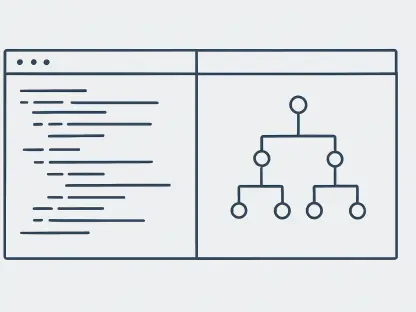
Engineers have long struggled with the three-way build dilemma, where maintaining feature parity across Web, iOS, and Android platforms consumed a disproportionate amount of development resources. A2UI v0.9 addresses this inefficiency by utilizing a unified Python Agent SDK and a robust web-core library to drive the application logic. This architecture allows the backend agent to determine the necessary interface elements and communicate those needs through real-time JSON blueprints. These declarative instructions serve as a universal language that replaces the need for static screen mapping across different operating systems.
The integration capabilities of this framework extend to industry-standard renderers, including React, Flutter, and Angular. Because the instructions are delivered as structured data, the host application simply maps the incoming JSON blueprint to its local component library. This ensures that the user receives a native experience regardless of the device they are using, while the logic remains centralized and consistent. This level of cross-platform harmony significantly reduces the technical debt associated with maintaining multiple codebases for a single user journey.
Market Momentum and the Economic Impact of Generative Interfaces
The adoption of these generative systems is already yielding measurable results within the enterprise sector. Statistical analysis of early deployments reveals a thirty percent improvement in overall code quality and a twenty-five percent reduction in the standard development lifecycle. These gains are primarily driven by the automation of repetitive layout tasks, allowing teams to focus on higher-level logic. As we look toward the period between 2026 and 2028, the growth of adaptive enterprise software is expected to accelerate, particularly for role-specific UI layouts that change based on user permissions and data complexity.
Google is strategically influencing the broader AI vendor ecosystem by establishing these standards early. By providing a clear framework for how generative UI should function, they are forcing other players to align with a component-based, orchestrated approach rather than a raw-generation model. This standardization is critical for the economic viability of AI in the frontend, as it provides a predictable path for scaling complex applications without sacrificing the reliability that large-scale organizations require.
Navigating the Technical Hurdles and Organizational Barriers
Transitioning to a generative model introduces new complexities, particularly regarding state synchronization and the validation of agent logic. Ensuring that the AI agent maintains a consistent understanding of the application state across a session is a non-trivial challenge that requires sophisticated feedback loops. Developers must now implement rigorous validation layers to confirm that the instructions generated by the agent are not only visually correct but also logically sound and capable of handling complex data interactions without failure.
Maintaining design consistency also requires a shift in how creative teams operate. The move from static Figma mockups to dynamic, code-driven libraries means that designers must think in terms of systems and constraints rather than fixed pages. Furthermore, security and compliance remains a top priority, necessitating that all execution and data control stay within the client application. Organizations must develop new strategies for training their development teams, moving away from traditional syntax mastery and toward expertise in prompt engineering and agent orchestration.
Standards, Security, and the Regulatory Landscape of AI-Generated Code
The reliance on established design and accessibility standards becomes even more critical in an automated environment. Automated systems must be programmed to prioritize these standards natively, ensuring that every generated interface is accessible to all users by default. Protecting proprietary component libraries is another vital concern, as these assets represent significant intellectual property. The A2UI framework addresses this by keeping the component source code separate from the AI’s instruction set, providing a layer of protection against unauthorized access or leaks.
As the regulatory landscape evolves, the focus of quality assurance is shifting from visual verification to the validation of logic and intent. QA methodologies must adapt to test the boundaries of what an agent can and cannot do, ensuring that the system remains within its defined operational parameters. This evolution in testing is necessary to ensure that generative interfaces remain compliant with industry regulations, particularly in highly scrutinized sectors like finance and healthcare where data integrity and user safety are paramount.
The Future of Software Engineering: Toward Autonomous Interface Delivery
The evolution of professional roles in the tech industry is becoming increasingly clear as developers transition into the roles of system architects. In this new landscape, the primary task is no longer the manual construction of buttons and forms but the design of the systems that manage them. We are seeing the rise of hyper-personalized ERPs and administrative dashboards that can reconstruct themselves on the fly to meet the specific needs of a user at any given moment. This level of personalization represents a significant leap forward in enterprise productivity.
Global economic conditions are acting as a catalyst for these innovations, driving the need for rapid UI iteration and reduced overhead. The move toward completely fluid, non-static digital environments suggests that the concept of a fixed application design may soon become a relic of the past. Disruption will likely come from systems that can anticipate user needs before they are explicitly stated, creating a seamless flow between human intention and digital execution that was previously unimaginable.
Final Assessment: The Long-Term Viability of the A2UI Framework
The introduction of the A2UI framework successfully shifted the development paradigm from a focus on rigid syntax to a model based on living, intent-based responses. Organizations that recognized this change early were able to integrate generative UI into their development lifecycles, gaining a significant competitive advantage in speed and flexibility. It became clear that the ability to orchestrate existing assets was far more valuable than the ability to generate new code from scratch, as it preserved the security and integrity of the original design systems.
Enterprises were encouraged to begin modularizing their existing libraries to prepare for this shift toward automation. By adopting a component-first mentality, these organizations ensured that their transition to generative interfaces was both smooth and scalable. The success of A2UI v0.9 proved that the future of frontend engineering lay in the balance between AI efficiency and human-defined constraints. Google solidified its position as the primary architect of the next generation of interface design, providing the foundational infrastructure upon which the next decade of digital experiences was built.